Leak entry points, not just water stains
The inspection typically starts at penetrations, edge metal, parapet caps, transitions, and seams, then works outward to find the most likely entry point.
Describe the leak or pooling once and we'll connect you with a local contractor who works on flat surface systems in Seattle.
CALL NOW: (206) 207-2777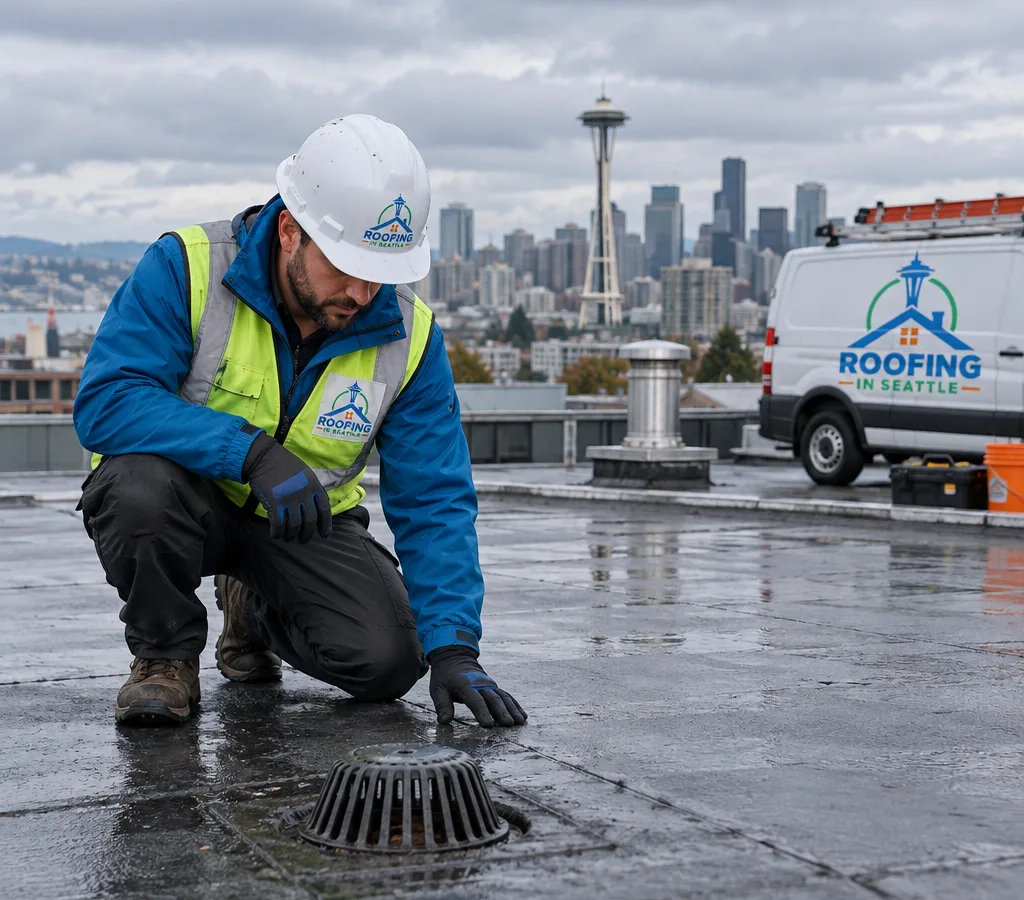
If you searched for flat roof repair Seattle, you're probably dealing with one of three symptoms: a leak that shows up after rain, water that sits on the roof longer than it should, or a membrane that looks cracked, wrinkled, or worn.
Seattle's long wet season makes small defects show up quickly. Low-slope roofs shed water differently than steep-slope roofs, so details matter: seams, corners, penetrations such as vents, HVAC curbs, and skylights, roof-to-wall transitions, and drains or scuppers.
A contractor typically starts by narrowing the water path. Interior staining does not always line up with the roof defect, because water can travel along the deck or insulation before it drops into the building.
Common repair triggers on flat and low-slope systems include:
Roofing in Seattle connects homeowners with local contractors who handle this type of troubleshooting and repair on flat surface systems.
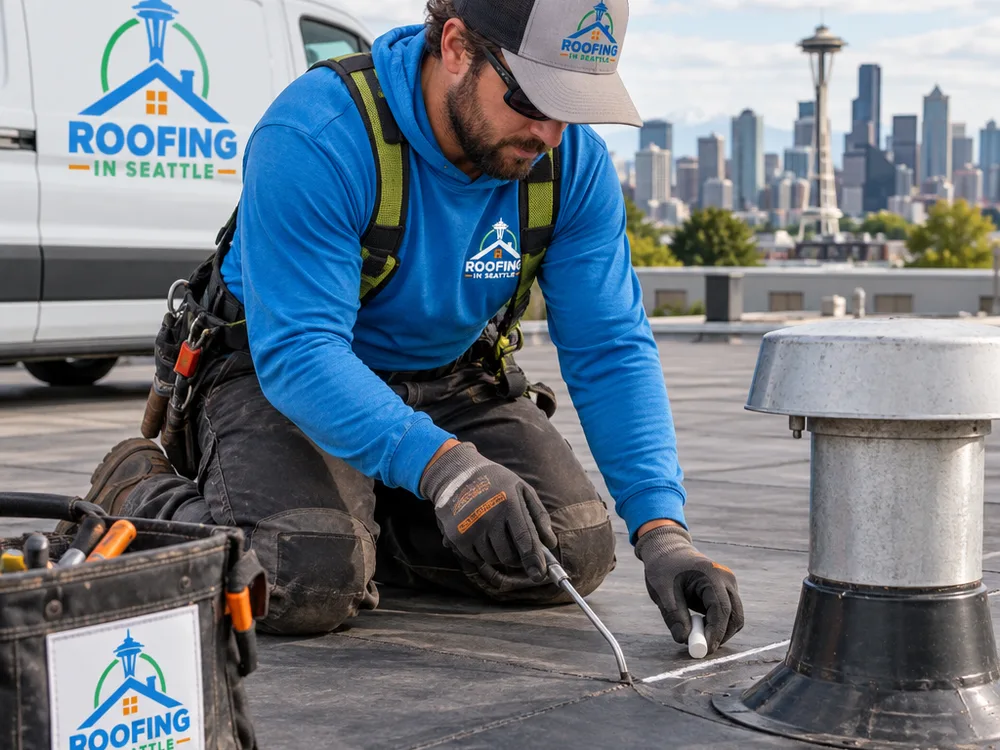
The inspection typically starts at penetrations, edge metal, parapet caps, transitions, and seams, then works outward to find the most likely entry point.
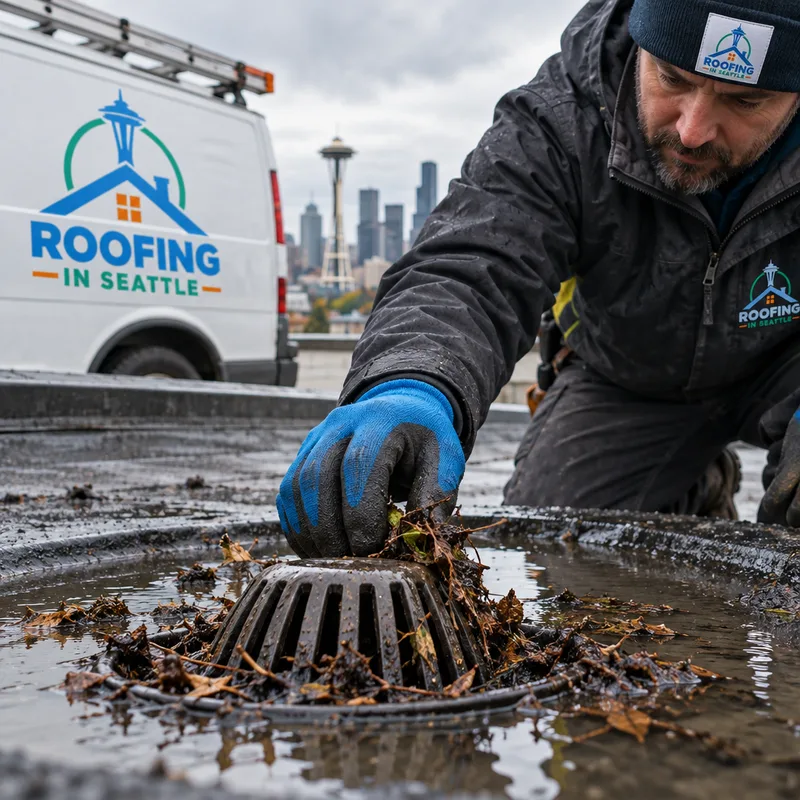
Roof drains, scuppers, and low spots are checked for blockages and signs of standing water, because ponding can accelerate seam and flashing problems.
Repairs differ for TPO, PVC, modified bitumen, BUR, EPDM, and coatings. A contractor matches the repair method to what's already on the roof.
If water has gotten below the membrane, the contractor may identify the affected area so repairs address both the surface defect and the wet section under it.
Many recurring leaks come from terminations: counterflashing, termination bars, coping joints, and how the membrane ties into vertical surfaces.
On the call, describe where the leak shows up inside, when it happens, and anything you've noticed on the roof like splits, open seams, or ponding.
You describe the situation once, and we connect you with a contractor in the Seattle area who handles flat and low-slope roof repairs.
The contractor typically checks seams, flashings, penetrations, drains, edges, and the general membrane field, then narrows down the likely water path.
Depending on the roof type and condition, options may include patching, seam reinforcement, re-flashing details, targeted membrane replacement, or a coating strategy when it fits.
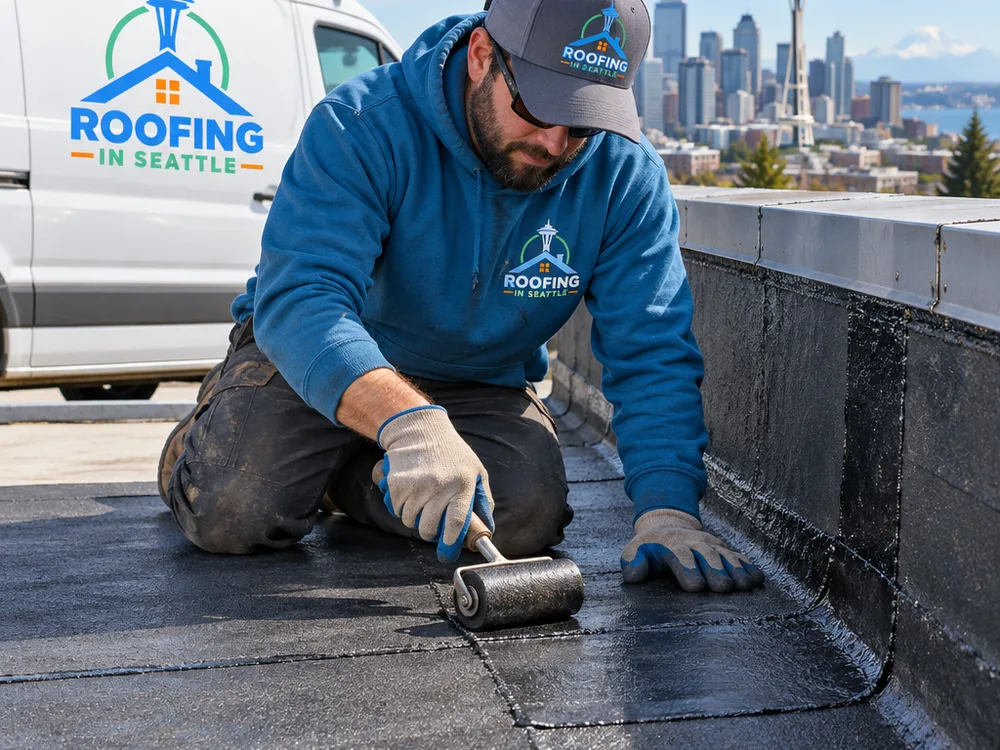
Repairs usually include surface preparation, compatible materials, and a final check of drains and terminations.
If water is getting in, the hardest part is often finding the right person for this specific roof type.
Describe the roof and the symptoms once, and get connected with a local contractor who can take it from there.
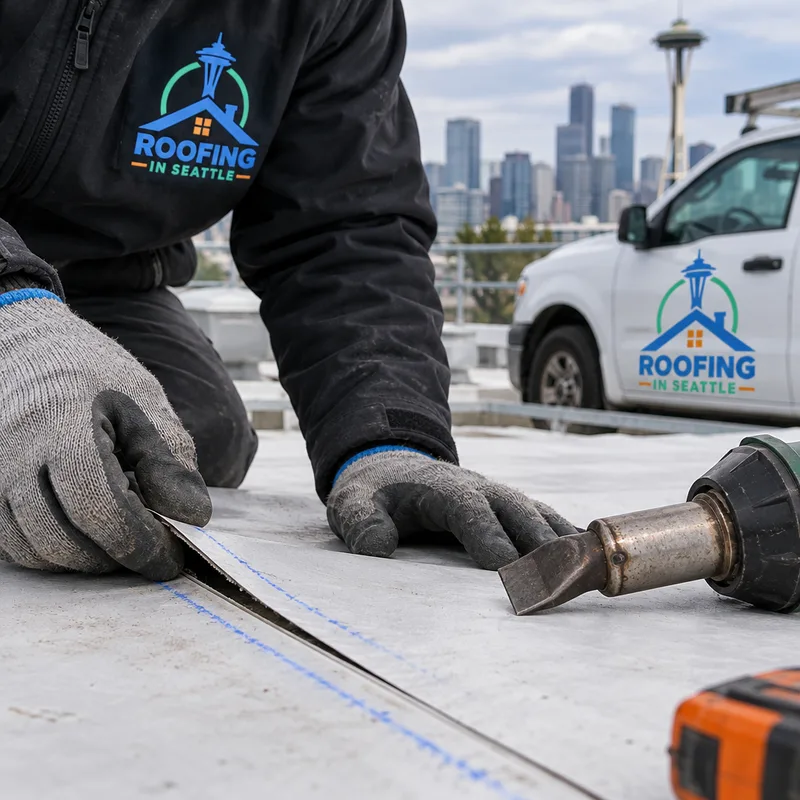
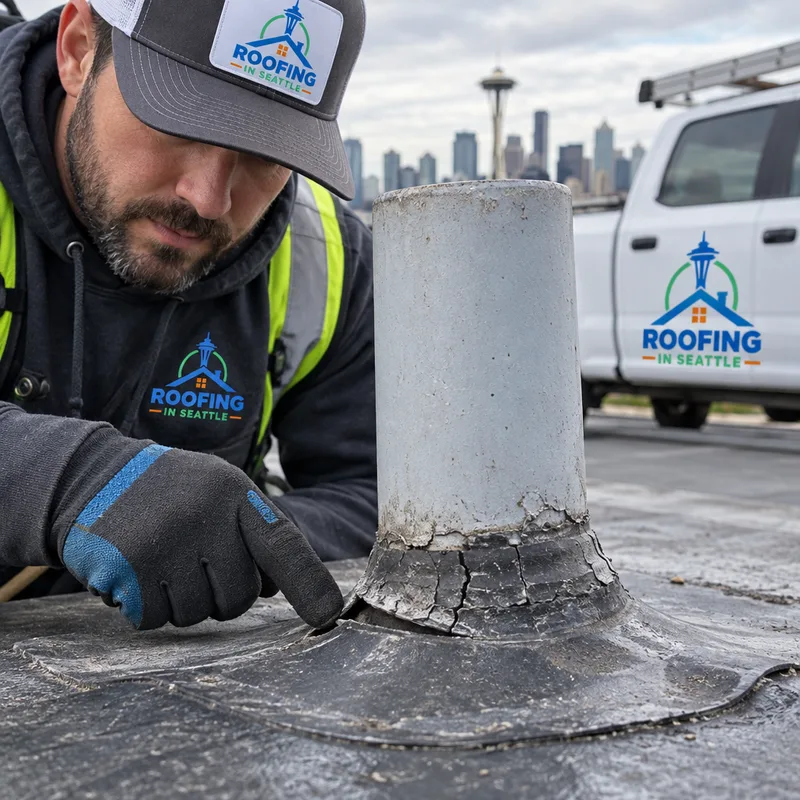
A repair is usually focused on a specific failure point like a seam, flashing, penetration, or small puncture, while a larger fix is considered when problems repeat in multiple areas or the membrane is widely deteriorated. A contractor will look at how much of the roof is affected, whether water is trapped under the membrane, and how well the roof is draining before recommending a direction.
Have the building type, an approximate roof size, the roof height and access, and what you know about the roof material. Also note when the leak shows up and where it appears inside, because that helps the contractor narrow the water path.
Low-slope roofs are designed to drain with a slight pitch, so pooling often points to blocked drains or scuppers, settled insulation, deck deflection, or a low spot at a transition. A contractor typically checks drain function and looks for areas that hold water after rain.
Yes, many leaks are solved by reworking flashing details at penetrations and roof-to-wall transitions. The contractor will determine whether the existing membrane and flashing components are compatible with a repair and whether the surrounding field membrane can provide a reliable tie-in.
Expect an on-roof inspection, photos of suspected problem areas, and a discussion of repair approaches that fit your roof system. Repairs often involve cleaning and drying the surface, preparing the membrane, installing a compatible patch or flashing detail, and checking terminations and drainage.
Roofing in Seattle takes your call, gathers the key details, and connects you with an independent local contractor who handles flat and low-slope roof repairs. You speak with the contractor directly about what they found, their scope, and whether you want to move forward.
Describe the roof type, where water shows up, and what you've already noticed. We'll connect you with a local Seattle-area contractor who works on flat surface repairs, and you can take the next step directly with them.
CALL NOW: (206) 207-2777Service Area
Our referral network covers Seattle, Washington and nearby communities — explore the map to see the neighborhoods and surrounding areas we serve.