One description, then a connection
Explain where you see water and what kind of roof you have, and we'll connect you with a local contractor who does roof leak repair.
Describe what you're seeing once and we'll connect you with a local roofer who handles leak repairs and active interior water intrusion.
CALL NOW: (206) 207-2777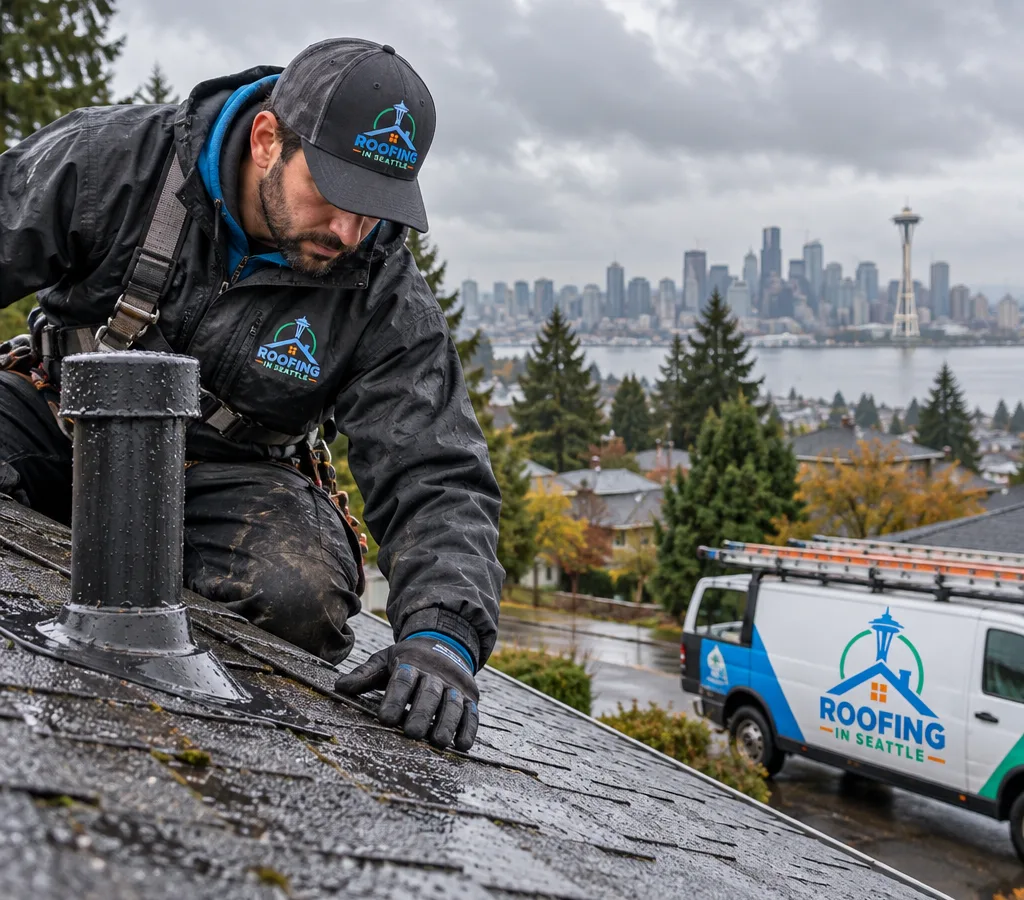
A roof leak rarely shows up directly under the hole. Water can enter at one point, travel along underlayment or sheathing, and finally drip where a seam, nail, or low spot gives it a path into the attic or ceiling. That's why roof leak Seattle calls often start with an interior symptom—a stain, a drip, or wet insulation—and end with a repair somewhere else on the roof.
A contractor typically begins by narrowing the leak path. That can include checking the attic for wet decking, darkened wood, moldy insulation, or daylight at penetrations, then moving to the roof to inspect the likely entry points.
Common culprits in Seattle homes include:
Seattle's long wet season makes small problems show themselves quickly. A minor gap around flashing can become steady interior dripping during repeated rain, and once insulation gets wet it can hold moisture against wood for longer. The practical goal of roof leak repair is to identify the entry point, repair it using the right detail—not just surface sealant—and confirm water is draining as designed.
If you're still deciding who to call, Roofing in Seattle is a referral service: one phone call gets your details to a local roofing contractor who can evaluate the leak and explain repair options. If you're comparing roofers more broadly, it may help to start with roofers in Seattle and then narrow to leak work.
Explain where you see water and what kind of roof you have, and we'll connect you with a local contractor who does roof leak repair.
Leak work is diagnosis first. The contractor can follow the water path—attic to roof—instead of guessing from the ceiling stain alone.
Seattle has a lot of composition shingles and many low-slope sections on additions and porches. The contractor you speak with can account for both.
You can hear the difference between a temporary stopgap and a proper flashing or material repair, then decide what makes sense for your home.
You talk directly with the contractor about scope and schedule, and you decide whether to move forward.
Share where the leak shows up—ceiling, wall, or around a skylight—when it happens, and whether you've had past roof work.
We route your details to an independent contractor who serves Seattle and handles roof leak repair work.
Expect questions about roof age, roof type, recent wind, nearby trees, and penetrations near the leak. Many contractors check both attic evidence and roof conditions.
If you want to proceed, you coordinate directly with the contractor on the repair plan and timing.
If water is getting inside, describe the symptoms once and get connected with a roofer who can trace the entry point and explain the repair.
CALL NOW: (206) 207-2777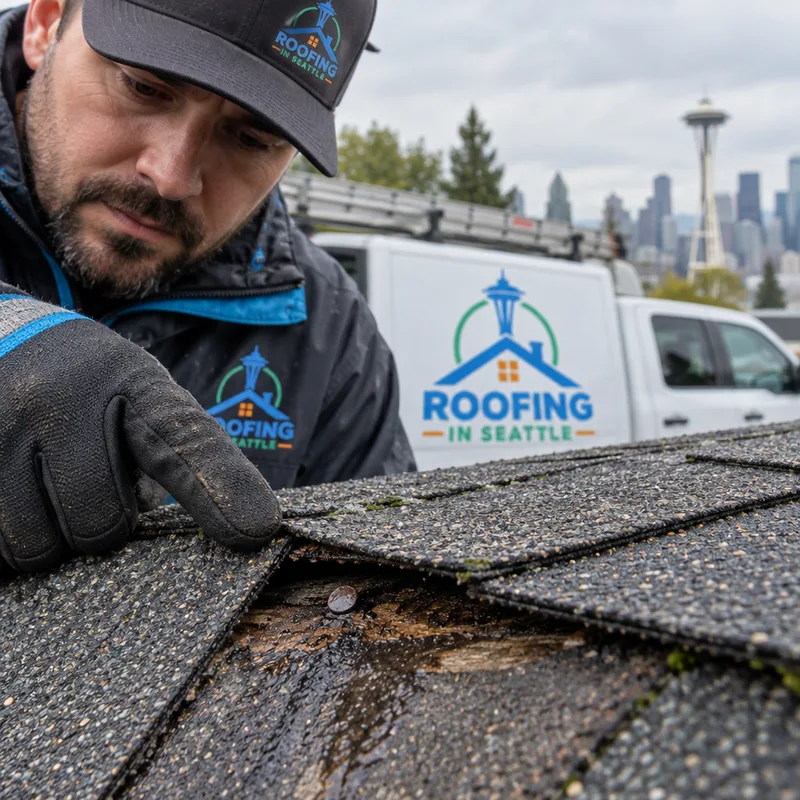
A true roof leak usually correlates with rain and often shows staining that grows after storms, while condensation tends to show up during cold snaps and may look like widespread dampness or frost in the attic. A contractor will look for a defined water trail on rafters or decking and compare it to roof penetrations above, including plumbing vents and bath fan ducts that should terminate outside.
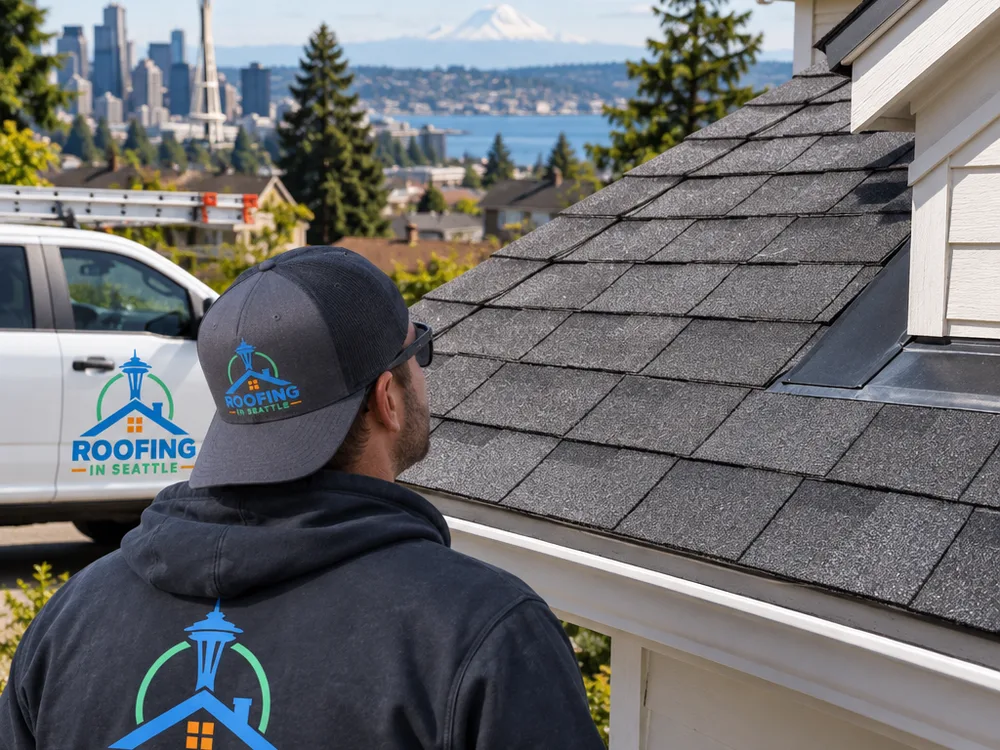
Not always, because water can travel along framing, the underside of the roof deck, or around a penetration before it drops. Roofers commonly start at the interior symptom and then work upslope and sideways to find the entry point, paying close attention to valleys, skylights, chimneys, and wall-to-roof transitions.
The most helpful details are the leak location, whether it happens only during rain, the roof type, and nearby features like a skylight, chimney, or vent pipe. If you can safely take photos from the ground of the roof area and interior staining, the contractor can use those to narrow likely entry points.
The first checks are usually penetrations and flashing, because many active leaks start there even when shingles look intact. In Seattle, roofers also pay attention to debris that slows drainage in valleys and gutters, and to transitions between steep-slope roofing and low-slope sections on porches or additions.
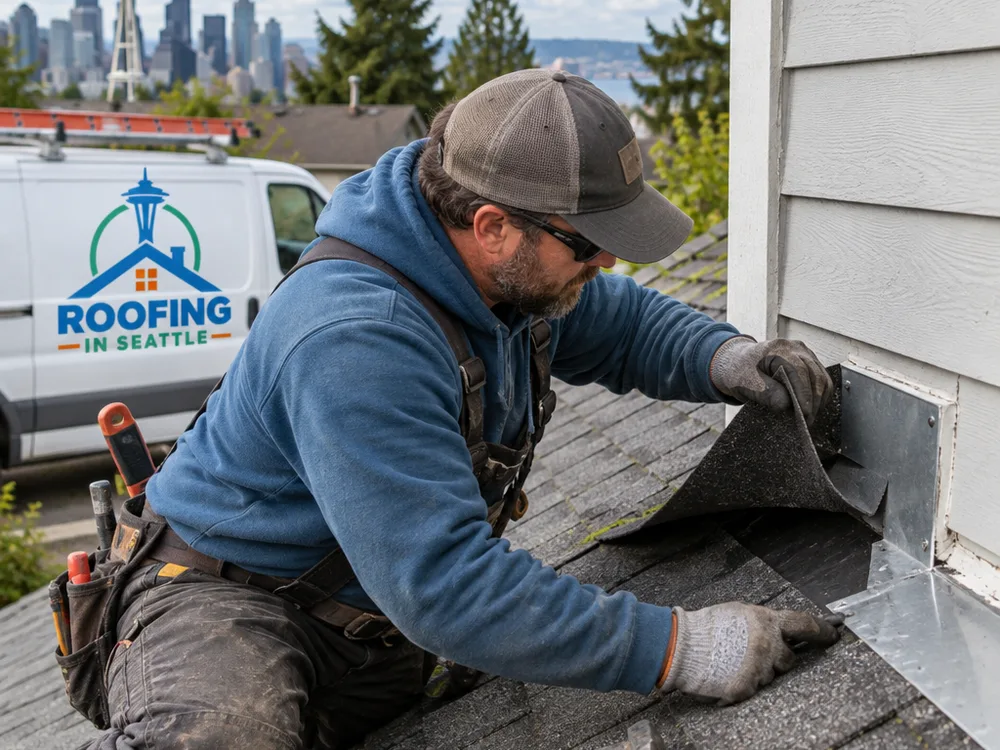
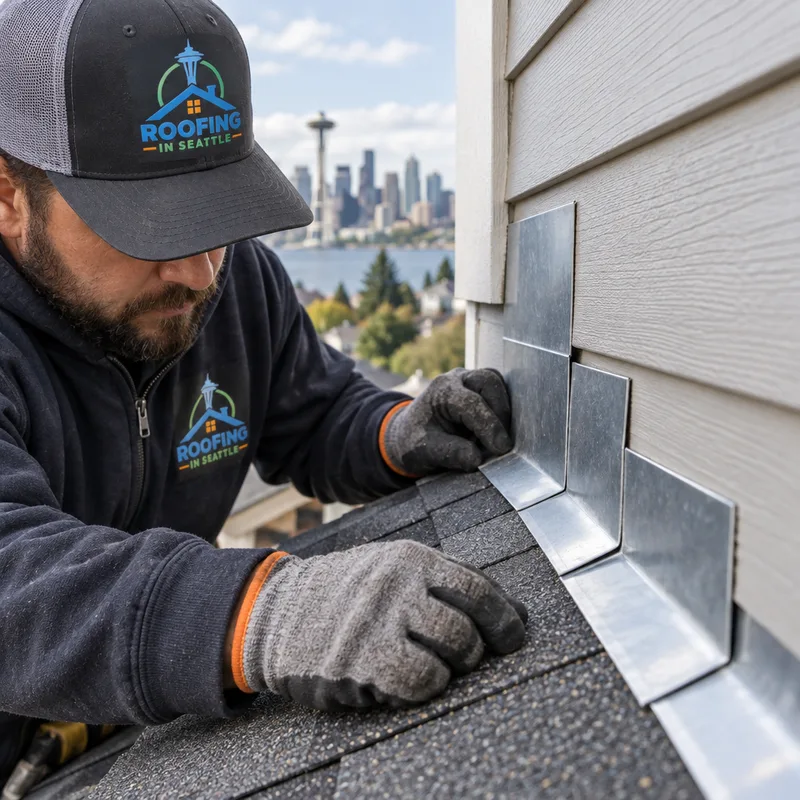
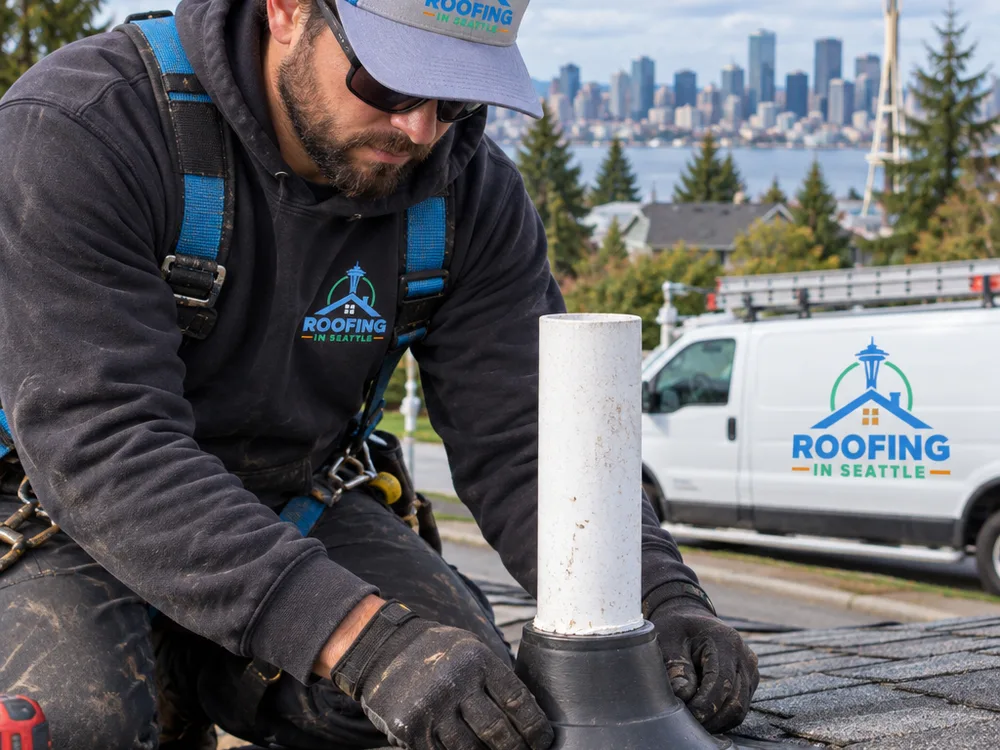
Caulk can stop water temporarily in some situations, but it often fails when the real issue is a missing or incorrectly layered flashing detail. A durable repair usually involves correcting the water-shedding layers, such as replacing a pipe boot, rebuilding step flashing, or reworking a skylight flashing kit.
A leak does not automatically mean replacement. Many leaks are localized to flashing, penetrations, or a small damaged area, and the contractor can explain whether a targeted repair is appropriate or whether broader wear is making multiple areas vulnerable.
You call, describe the leak symptoms and roof type once, and we connect you with an independent local roofing contractor who handles leak repair work. You then speak with the contractor directly about inspection, repair approach, and next steps.
Water stains spread and wet insulation can hold moisture against the roof deck. Explain what you're seeing, and we'll connect you with a contractor who can track the leak to its source and walk you through repair options.
CALL NOW: (206) 207-2777Service Area
Our referral network covers Seattle, Washington and nearby communities — explore the map to see the neighborhoods and surrounding areas we serve.