Clogs and outlet restrictions
Debris can dam water at the outlet, in downspout elbows, or inside underground tightlines. Clearing is often paired with a flush test to confirm the path is open.
Describe what's leaking or overflowing once, and we'll connect you with a local contractor who repairs gutters in the Seattle area.
CALL NOW: (206) 207-2777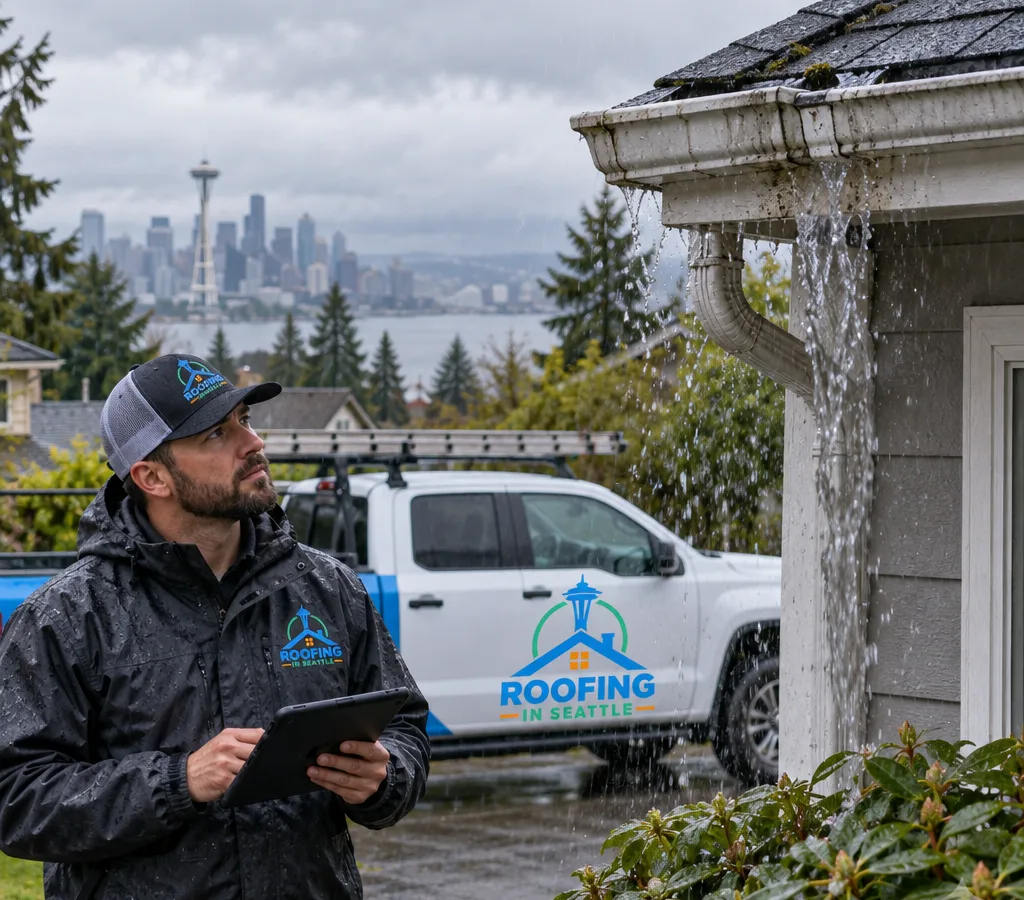
Seattle gutter repair usually comes down to restoring controlled drainage. When a gutter run leaks, sags, or clogs, roof water can spill behind the gutter, run down siding, or soak fascia and trim. Over time that can lead to rot at the eaves, staining, and wet areas around the foundation.
A contractor will typically start by tracing the water path: where the overflow begins, whether the downspout is accepting flow, and whether the gutter is pitched correctly toward an outlet. In neighborhoods with a lot of tree cover, like Ballard and parts of Magnolia, clogs often build at the downspout drop or in tight elbows. On taller, narrow homes common around Capitol Hill, even a small mis-pitch can show up as persistent standing water in long runs.
This page focuses on gutter repair in Seattle: sealing leaks at joints and end caps, rehanging sagging sections, correcting slope, clearing blockages, replacing damaged hangers, and swapping out short stretches that are bent or rusted through. If the problem is actually coming from the roof edge, a contractor may recommend addressing roofing issues as well; many homeowners start by getting connected with a roofer through roofing in Seattle when water intrusion points back to the shingles, flashing, or underlayment rather than the gutter itself.
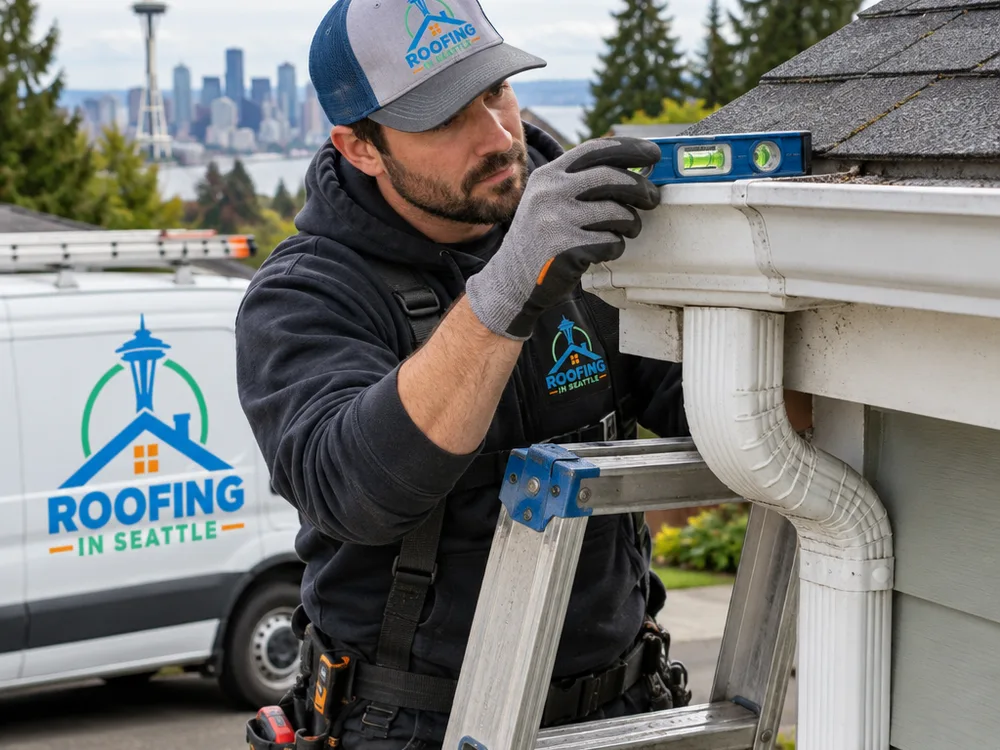
Debris can dam water at the outlet, in downspout elbows, or inside underground tightlines. Clearing is often paired with a flush test to confirm the path is open.
A gutter should slope toward its downspout. Low spots from a sagging run or shifted hangers can leave water sitting, which accelerates corrosion and overflow.
Corners, end caps, and splice joints are common leak points. Repairs can include resealing, re-fastening, or replacing a connector if the metal is distorted.
Loose fasteners sometimes mean the fascia board is soft or the hanger spacing is wrong for the span. A contractor will look for rot and secure to solid framing.
Even when the gutter is clear, a downspout that dumps too close to the house can cause splashback or pooling. The contractor may suggest extensions or routing changes.
Tell us where the issue shows up, what happens during rain, and whether you've noticed staining on siding or fascia.
Roofing in Seattle takes your details and connects you with an independent contractor who handles leaks, sags, clogs, and downspout problems.
The contractor checks pitch, hangers, seams, and the outlet path, then explains whether the right fix is resealing, rehanging, clearing, replacing a short section, or a larger correction.
After the repair, the contractor typically confirms water moves to the downspout without pooling and that seams and corners stay dry during a controlled flow test when conditions allow.
If water is spilling over an edge, dripping at a seam, or soaking the fascia, describe the symptoms once and get connected with a local contractor who can repair the gutter run.
CALL NOW: (206) 207-2777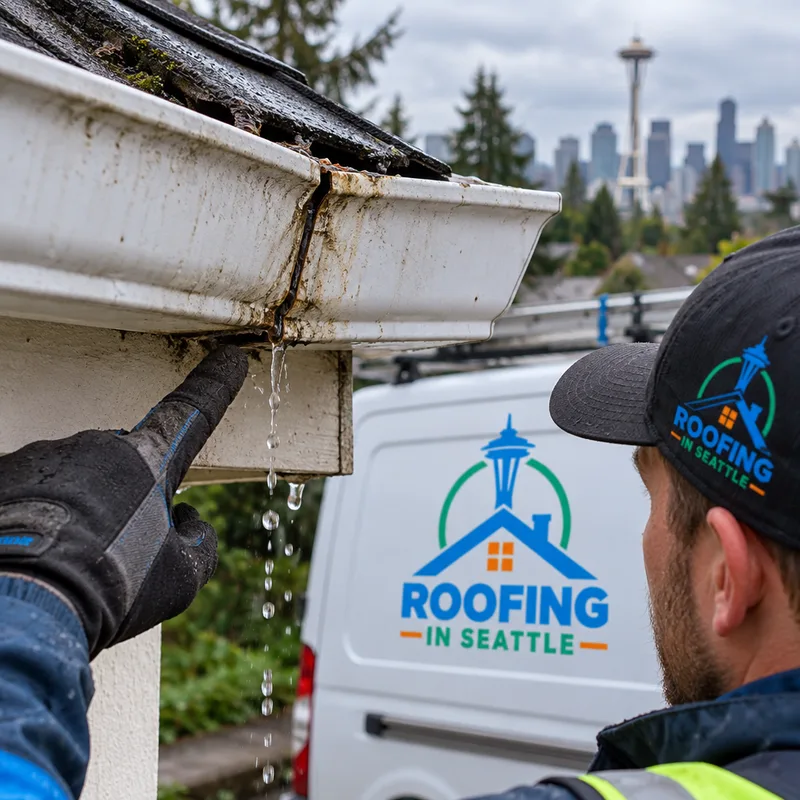
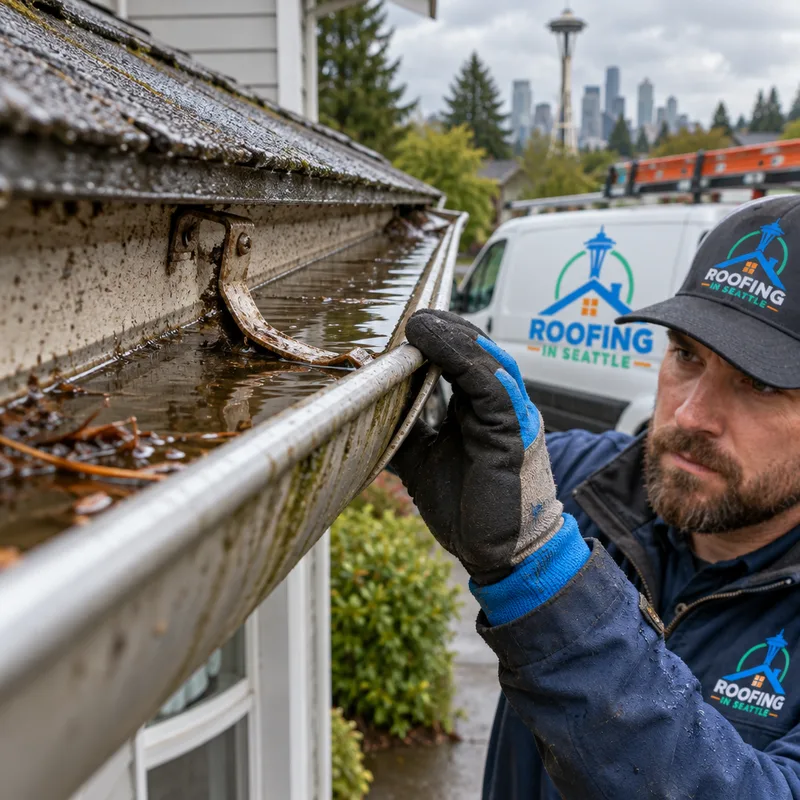
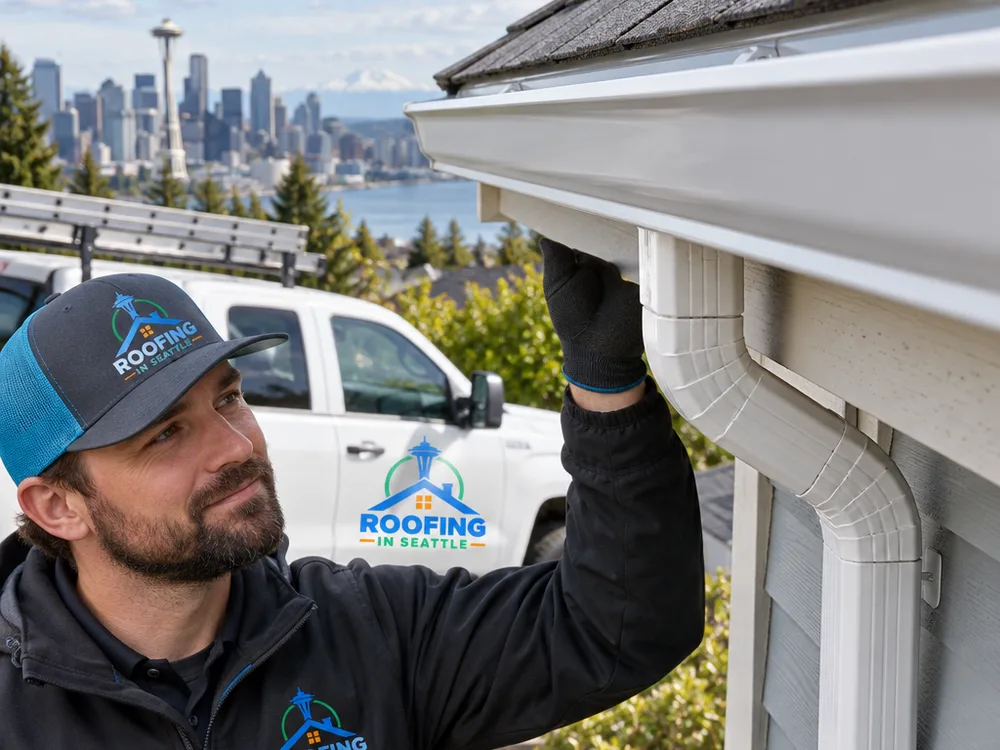
If the problem is localized—one leaking seam, a short bent section, a loose downspout, or a sag in one span—repair is often a practical option. When multiple runs are corroded through, repeatedly pulling away from the fascia, or mismatched from past patchwork, a contractor may recommend replacement to get consistent pitch and watertight joints.
Overflow most often comes from a clog at the outlet or downspout, or from a gutter that has lost its pitch and holds water. In areas with heavy leaf and needle drop, debris can collect at the downspout drop first, so the gutter looks clear until water backs up in a storm.
A small seam leak can sometimes be resealed if the metal is still straight and the joint can be cleaned and secured properly. If the seam is pulled apart, the end cap is deformed, or the gutter edge is warped, the contractor may suggest replacing the connector or that short section so the repair stays tight.
Sagging is usually tied to hanger failure, improper spacing, or attachment into weak wood. A contractor will check whether fasteners are pulling out, whether the fascia is soft, and whether the gutter has enough slope toward the downspout after it's rehung.
Note where the water shows up and what it does during rain: spilling over the front lip, dripping behind the gutter, leaking at a corner, or backing up at a downspout. If it's safe to check from the ground, also note whether the downspout outlet is discharging freely or if water is spilling from the top during heavy flow.
You'll speak with the contractor directly about the inspection findings, options, and the scope of work. Roofing in Seattle is the referral service that takes your call and connects you with a local contractor who handles the repair.
Call and describe what's happening once. We'll connect you with a local Seattle-area contractor who can take a look, explain the repair options, and let you decide what to do next.
CALL NOW: (206) 207-2777Service Area
Our referral network covers Seattle, Washington and nearby communities — explore the map to see the neighborhoods and surrounding areas we serve.