Cleaning and downspout clearing
Removal of leaves, needles, roof grit, and sludge from the gutter channel, then clearing outlets and downspout elbows so water can exit.
Describe what’s happening once and we’ll connect you with a local contractor who works on gutter cleaning, repairs, and replacement for Seattle homes.
CALL NOW: (206) 207-2777
Seattle gutters have one job: catch roof runoff and move it to downspouts so water exits where it can drain away from the roof edge and foundation. When that flow gets interrupted, you’ll see the same few symptoms: water spilling over the front of the gutter, staining on fascia boards, drips behind the gutter, splash marks along siding, or downspouts that dump right at the base of the house.
Because Seattle gets long stretches of wet weather, small issues show up fast. Debris buildup can turn a gutter into a trough that overflows even in moderate rain. A slight sag can create a low spot where water sits and sludge forms. A clogged downspout can make the gutter back up and pour over the edge.
A contractor will usually start by finding what is driving the problem:
If you’re describing the issue on the phone, mention what you see—overflow, dripping behind the gutter, staining, or puddling—and where it happens. That helps us connect you with a local contractor who handles the right kind of gutter work.
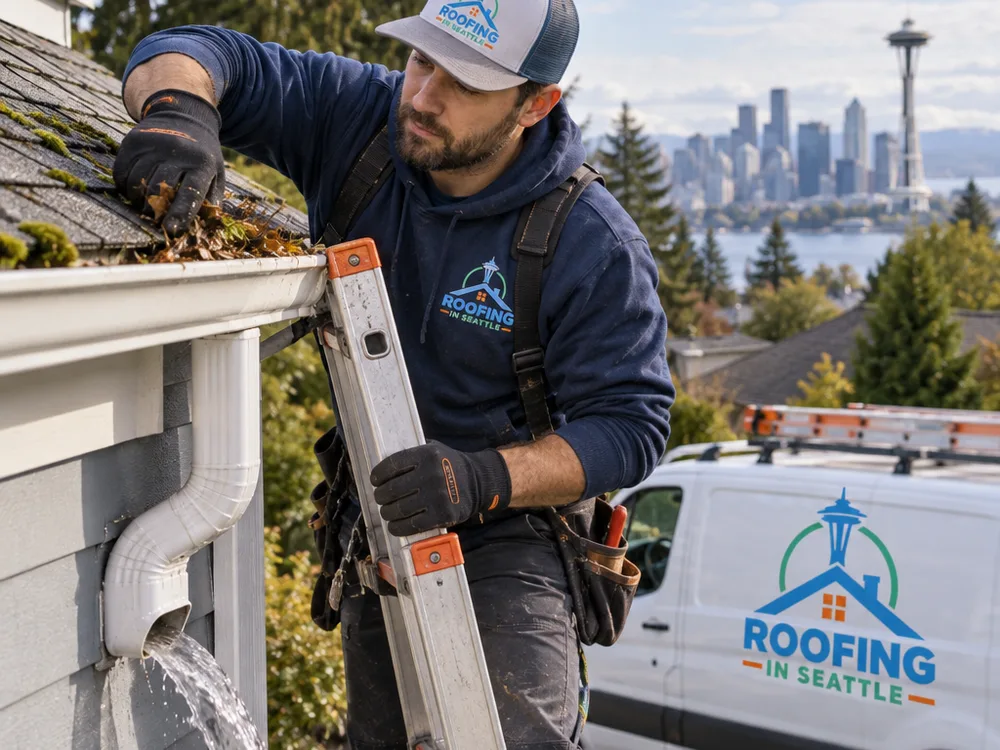
Removal of leaves, needles, roof grit, and sludge from the gutter channel, then clearing outlets and downspout elbows so water can exit.
Adjusting sagging sections, replacing or adding hangers, and resetting slope so water runs to the downspouts instead of pooling.
Re-sealing joints and end caps on sectional systems after old sealant fails or movement opens small gaps.
Improving where water discharges, extending outlets, or correcting areas where runoff splashes onto siding or collects near the foundation.
When sections are bent, rusted through, or repeatedly leaking, replacement is often the cleanest way to restore consistent flow.
Share what you notice—overflowing, dripping behind the gutter, staining, or puddling—where it happens, and whether the home has gutters on multiple stories.
Roofing in Seattle connects you with an independent contractor who works on Seattle gutter systems and can discuss the next steps directly with you.
The contractor typically checks debris, outlet and downspout flow, slope toward the outlet, hanger condition, and fascia or drip-edge issues.
After cleaning, re-hanging, sealing, or replacement, the contractor typically runs water to confirm flow reaches the downspout without pooling or spilling.
If your gutters are overflowing or dumping water where they shouldn’t, describe what you’re seeing once.
One call can connect you with a local contractor who handles Seattle gutter work.
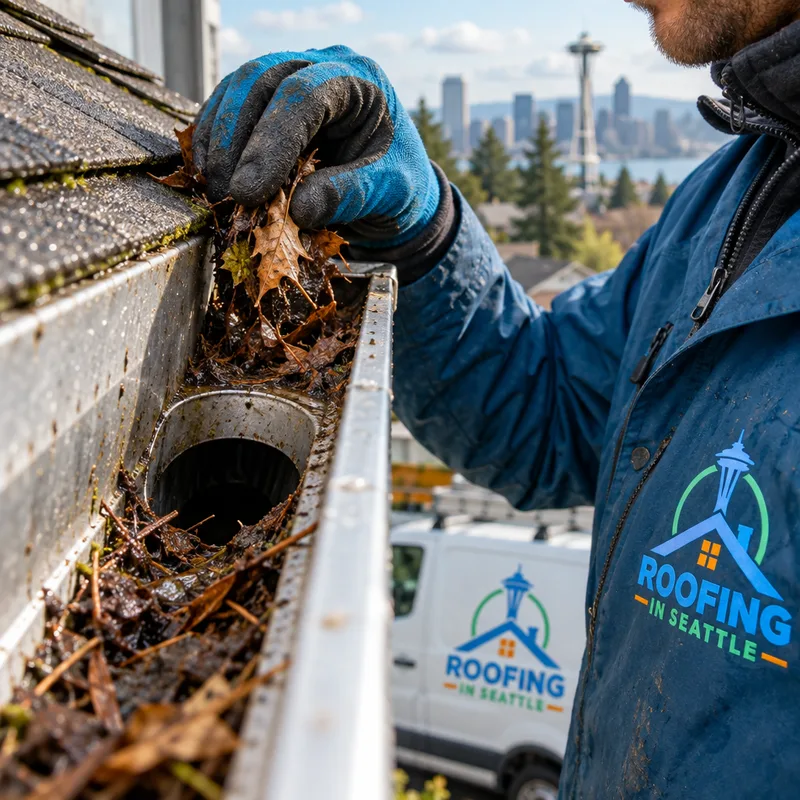
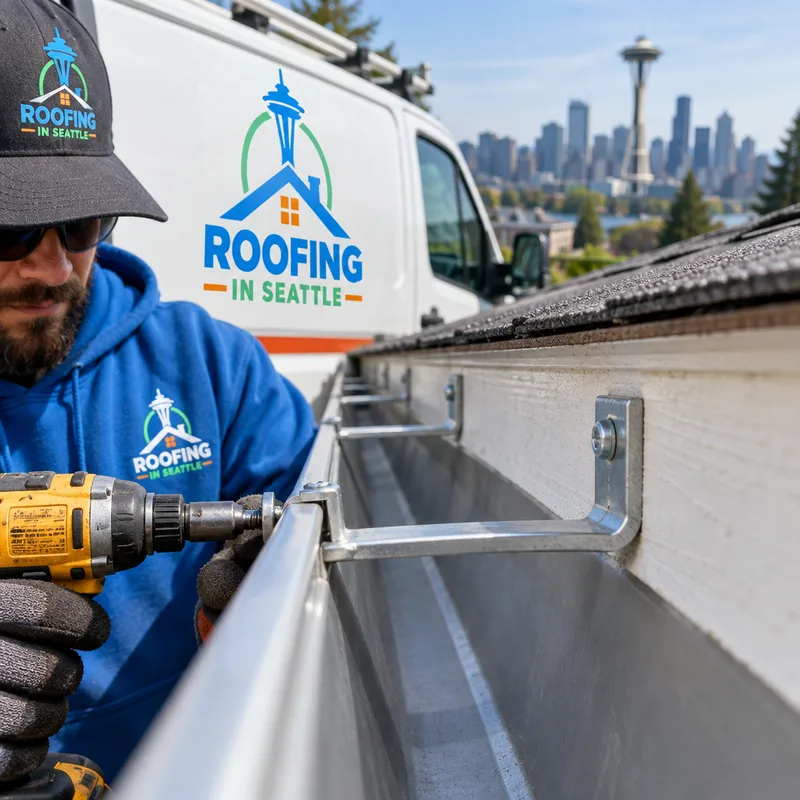
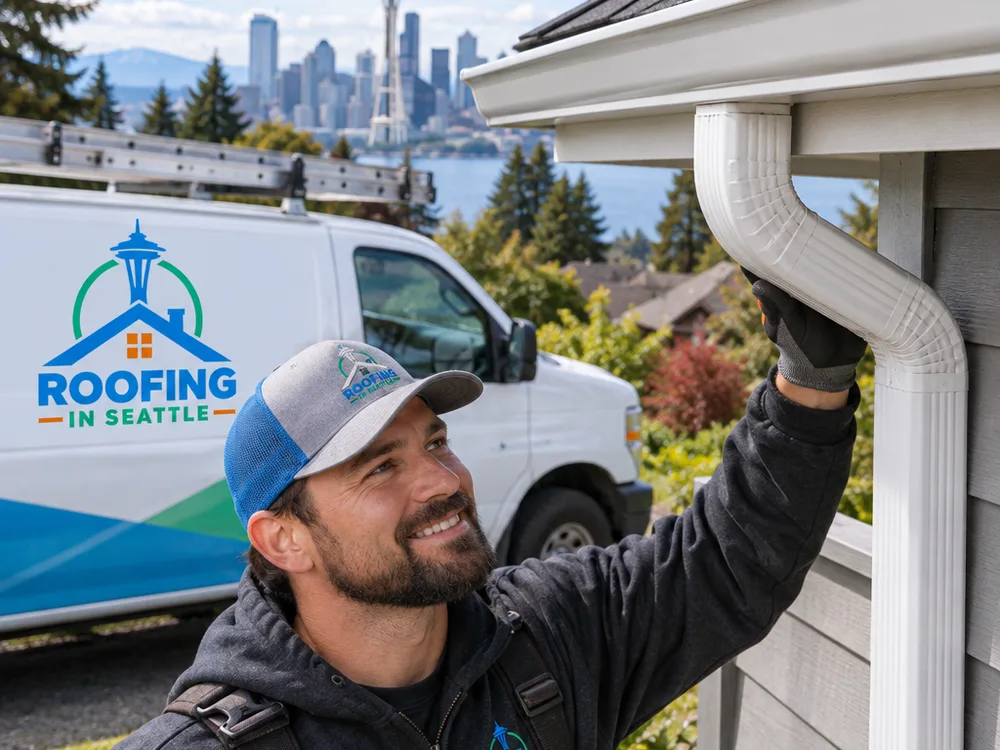
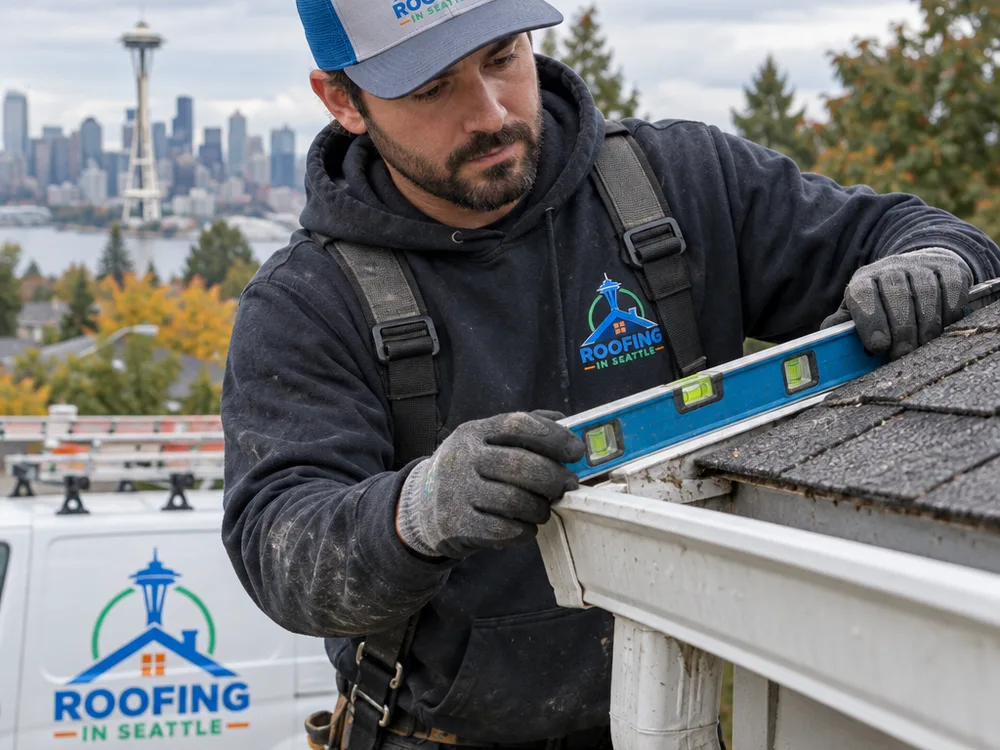
If water is overflowing but the gutter line is straight and attached tightly, the issue is often debris in the channel, outlet, or downspout. A sag, fascia gap, leaking seams, or water running behind the gutter can point to hanger, pitch, or joint problems in addition to cleaning.
Share the home height, which sides are affected, and what happens during rain—such as overflow at one corner, a waterfall mid-run, dripping behind the gutter, or a downspout that does not discharge. Nearby trees that drop leaves or needles are also useful context.
Dripping behind the gutter can point to a gap at the fascia, a gutter that has pulled away, or an edge detail that lets water cling under the roof edge. A contractor may check attachment points, the drip edge, and how the gutter sits below the roof edge.
Standing water usually means the pitch is off or a low spot has formed from sagging hangers. During Seattle’s wet months, that low spot can collect sludge and overflow sooner, so slope and support may need correction.
Guards can reduce debris but do not eliminate maintenance. Fine material such as fir needles and roof grit can still accumulate, and some guard styles can slow cleaning access. A contractor can discuss which types fit the roof edge and surrounding tree cover.
Replacement is commonly discussed when gutters repeatedly leak at seams, have widespread corrosion, are badly bent, or cannot hold alignment after re-hanging. A localized corner leak or one sagging run may be suitable for repair. The contractor can explain the tradeoffs after seeing the condition.
Yes. Some overflow and behind-the-gutter dripping problems trace back to roof-edge details or debris washing from the roof surface. The roof edge and gutter system may need to be considered together as one water-control setup.
Call Roofing in Seattle, describe what your gutters are doing during rain, and we’ll connect you with a local contractor who handles gutter cleaning, alignment, repairs, or replacement.
CALL NOW: (206) 207-2777Service Area
Our referral network covers Seattle, Washington and nearby communities — explore the map to see the neighborhoods and surrounding areas we serve.