Describe it once
Tell us what you're seeing—moss, streaking, clogged valleys, or overflow at gutters—and we connect you with a local contractor who handles roof washing.
Describe the roof's condition once and we'll connect you with a local contractor in Seattle who handles roof washing and roof cleaning.
CALL NOW: (206) 207-2777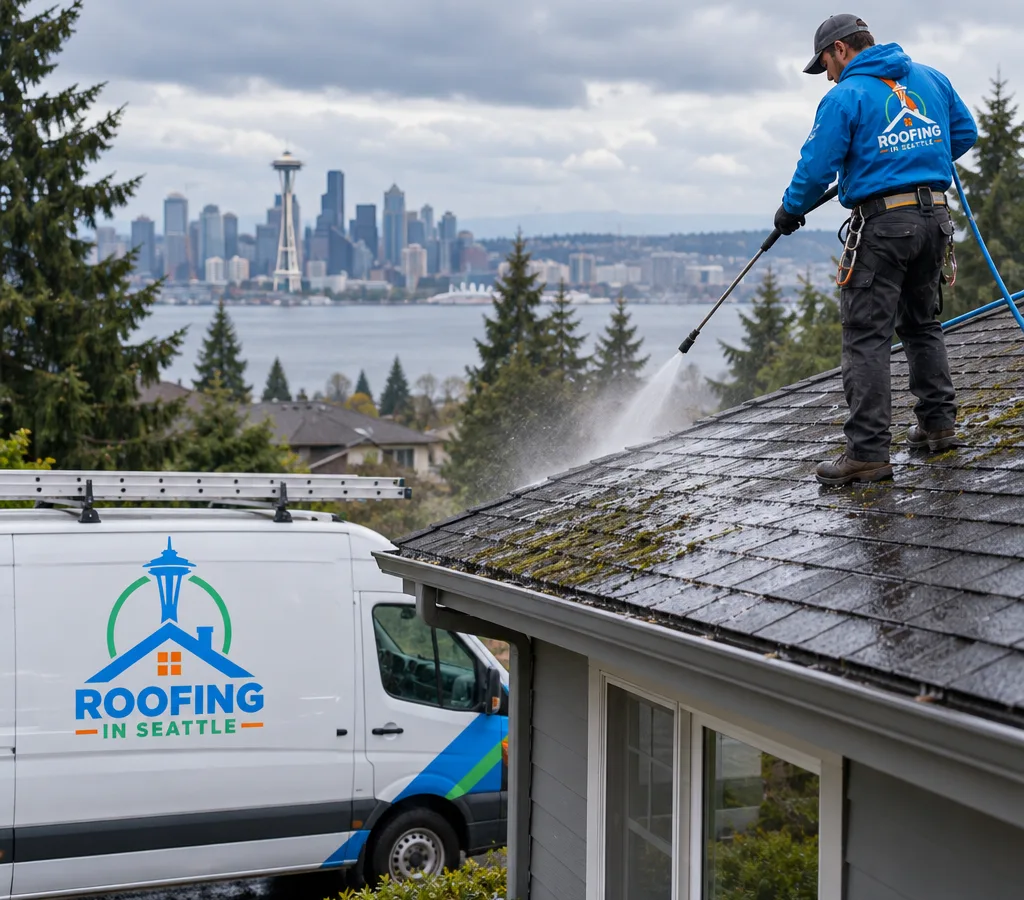
Roof washing is about removing organic growth and grime that hold moisture on the roof surface. In Seattle's damp months, that growth often shows up as dark streaks, green patches, or fuzzy buildup along north-facing slopes and under overhanging trees. Roof cleaning in Seattle is usually requested for three reasons: curb appeal, extending the life of the roofing materials, and clearing water paths so rain can shed the way the roof was designed to.
A contractor will first identify what is on the roof and what the roof is made of. That matters because the safest method changes with the material:
Many Seattle roof cleaners use a soft-wash approach—low pressure paired with appropriate cleaning solutions—rather than pressure washing. The goal is to kill the growth at the root and rinse it away without forcing water under laps, lifting shingles, or damaging flashing. If you're speaking with a contractor about eco roof cleaning in Seattle, ask what products they use, how they protect landscaping, and how runoff is managed near downspouts and storm drains.
If you're trying to decide whether you need cleaning or a broader roofing evaluation, a roofer in Seattle can also tell you whether you're looking at surface growth, worn shingles, or a drainage problem that cleaning alone won't solve.
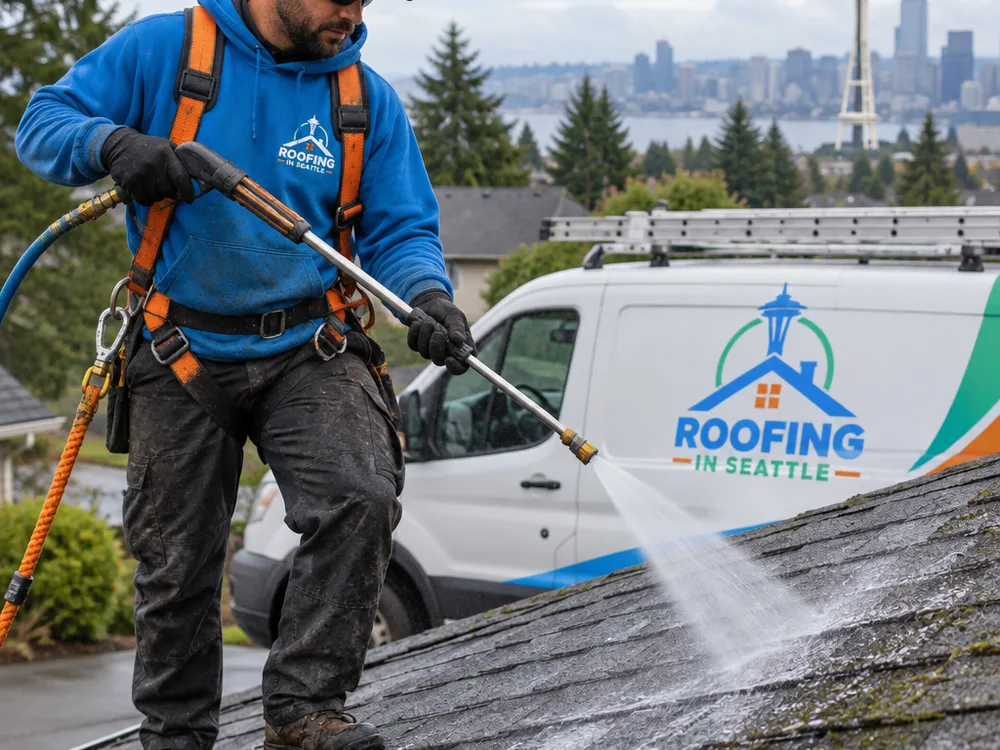
Tell us what you're seeing—moss, streaking, clogged valleys, or overflow at gutters—and we connect you with a local contractor who handles roof washing.
Seattle roof cleaning decisions change with tree cover, roof pitch, and how the roof drains. The contractor you speak with can tailor the method to those details.
You talk directly with the contractor, ask your questions, and decide whether to move forward.
A good roof cleaning service in Seattle starts by confirming roof type and condition so the cleaning method doesn't damage the surface.
From tight access in Capitol Hill to taller, steeper roofs in Queen Anne, access and safety affect how roof washing is planned.
The contractor looks at roof material, slope, age indicators, and where growth concentrates—often shaded areas, roof-to-wall intersections, and valleys. They may also note delicate details like skylights, solar mounts, or older flashing.
Most Seattle roof cleaners avoid high-pressure washing on shingles. They may use soft washing, controlled rinsing, and physical removal in limited areas. Landscaping, siding, and nearby walkways are usually protected and pre-wet, then rinsed afterward.
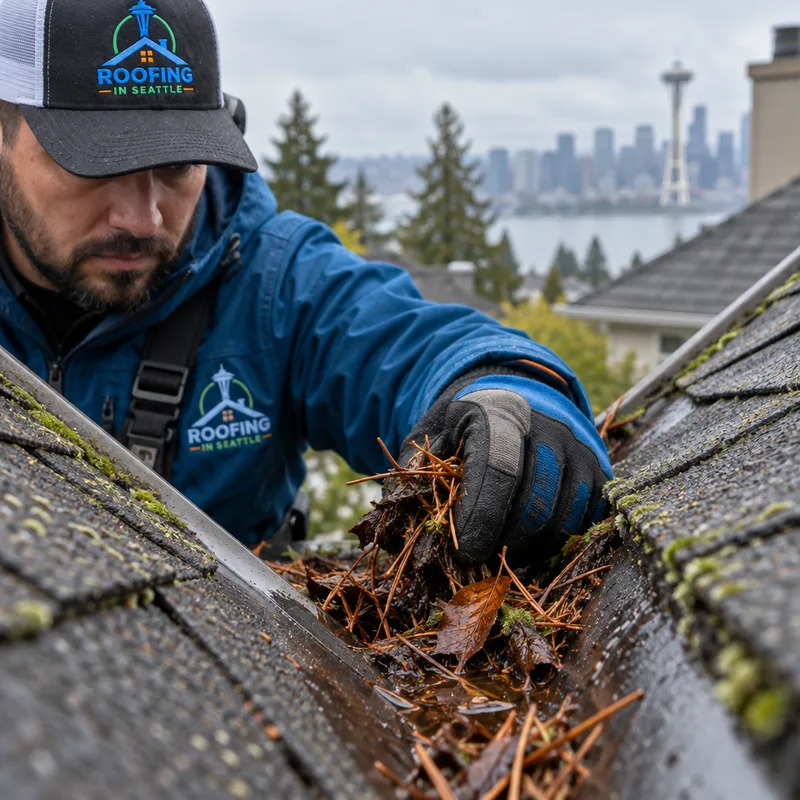
Valleys, areas behind chimneys, and spaces around roof penetrations collect debris and growth. Cleaning those areas helps water flow, especially during long stretches of rain.
A final rinse removes residue and loosened growth. A careful contractor may also flag obvious issues revealed by cleaning, such as lifted shingles, exposed fasteners, or failing sealant around penetrations.
Seeing moss, black streaks, or slippery buildup?
A short phone call is usually enough to get matched with a contractor who offers roof washing in Seattle and can discuss the safest approach for your roof.
Describe the moss, streaks, or buildup once and get connected with a local contractor who handles roof washing in Seattle.
CALL NOW: (206) 207-2777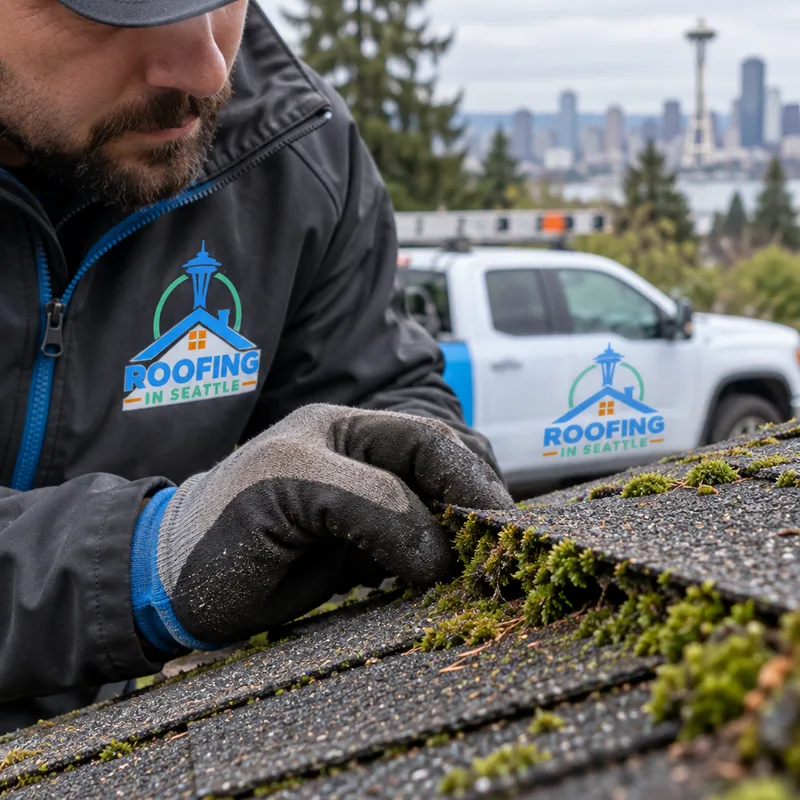
No. Many roof cleaners in Seattle avoid high pressure on shingles because it can dislodge granules and force water where it shouldn't go. A contractor will often recommend soft washing or limited manual removal where needed, depending on the roof type and condition.
Dark streaking on asphalt shingles is often algae staining, while dirt tends to look more random and may be heavier near tree cover or roof edges. Describe where the streaks are concentrated so the contractor can narrow down what may be present.
Start with the roof type if you know it, the steepness, and what you're seeing. Also mention access details such as a multi-story roof, tight driveway, or heavy tree cover because those factors affect how the work is set up.
It can if the wrong method is used. Aggressive pressure, harsh chemicals, or walking patterns that scuff shingles can cause premature wear. Ask what method is planned for your roofing material and whether it aligns with common manufacturer guidance.
Often, yes, because loosened debris and growth can end up in gutters and downspouts. Ask whether gutter clearing is part of the process and whether downspout flow will be checked after rinsing.
It can be, but it depends on product choice and runoff control. Ask what cleaning agents are used, how plants are protected, and how rinse water is managed around downspouts.
West Seattle homes often have a mix of tree cover and exposed windward roof faces, so growth patterns and debris load can vary by lot. Mention heavy overhanging branches, shaded slopes, or frequent valley debris.
The main drivers are roof material, pitch, height, how much growth is present, and access around the home. A contractor can explain what the quote will be based on after hearing those details.
You call, describe the roof and what you're seeing, and we connect you with a local contractor who provides roof cleaning in Seattle. You then speak directly with the contractor about scope, method, timing, and whether you want to proceed.
Tell us what's on the roof and what type of roofing you have. We'll connect you with a local Seattle contractor who can explain the cleaning options and take it from there.
CALL NOW: (206) 207-2777Service Area
Our referral network covers Seattle, Washington and nearby communities — explore the map to see the neighborhoods and surrounding areas we serve.