One conversation, one connection
Explain what you're seeing once. We connect you with a local contractor who works on roof leaks and storm damage in the Seattle area.
Describe the leak once and we'll connect you with a local roofing contractor who can handle the repair, tarp coverage, and next steps.
CALL NOW: (206) 207-2777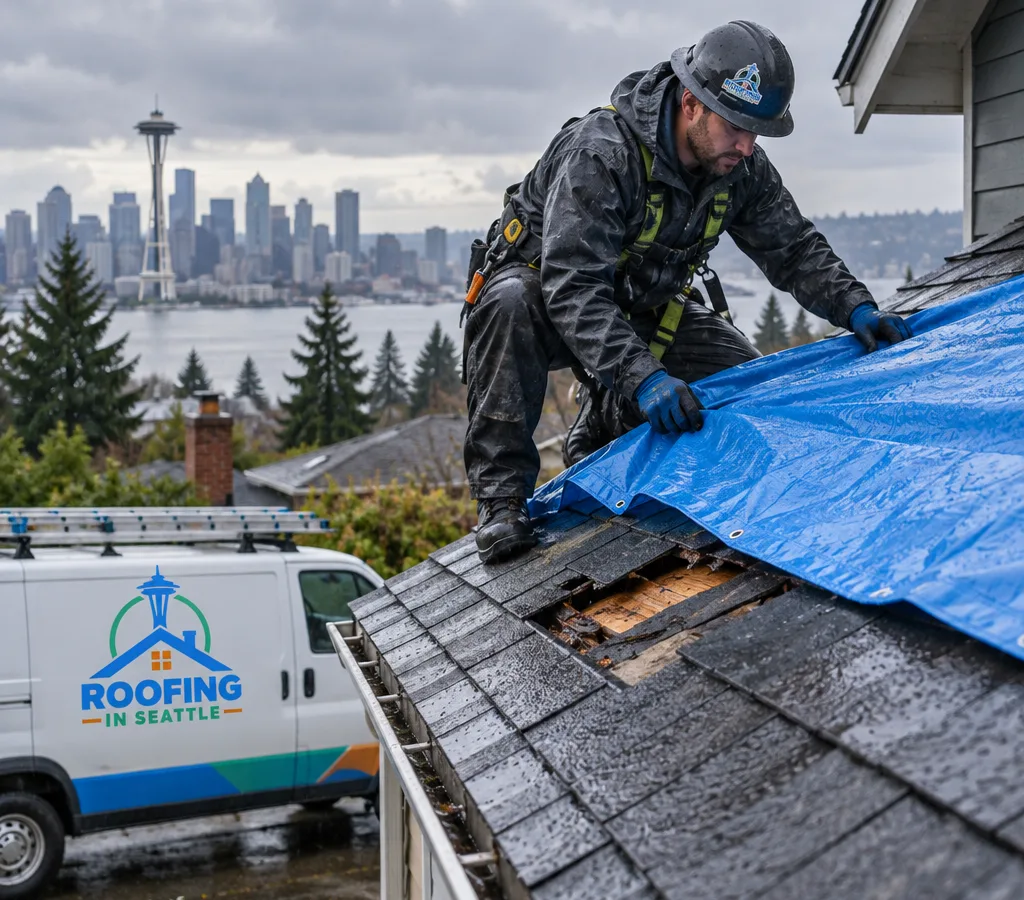
Searching for emergency roof repair Seattle usually means one of two things: active water getting into the building, or roof damage that is likely to turn into a leak with the next round of wind and rain.
A local contractor will typically start by figuring out the water path, not just the ceiling stain. In Seattle's long wet season, water can travel along plywood seams, rafters, insulation, or ductwork before it shows up inside. The first goal is to stop intrusion, then plan a durable repair.
Common situations that trigger an urgent roof repair call:
Where this often shows up locally: older homes in Ballard and Green Lake frequently have multiple roof penetrations that become leak points over time. Steep, tree-lined lots in West Seattle can mean more debris and branch impact after wind. Denser parts of Capitol Hill and Belltown include more low-slope sections where drainage details matter.
If your roof is actively leaking, protect the interior first: move valuables, place a bucket, and if a ceiling is bulging with water, keep clear of it. Avoid climbing onto a wet roof. The contractor you speak with can talk through immediate safety steps while they plan the repair approach.
If you're comparing options for bigger work, Seattle roofing decisions often start with whether the current problem is isolated damage or a sign the roof system is at the end of its service life.
Explain what you're seeing once. We connect you with a local contractor who works on roof leaks and storm damage in the Seattle area.
Roof leaks don't wait for business hours. When you call, we take the details and route you to a contractor who handles this kind of job.
Seattle homes often combine steep-slope shingles with low-slope porch or addition roofs. Getting matched to a contractor used to local roof types helps the conversation start in the right place.
You talk to the contractor directly, hear their plan, and decide whether to move forward.
A good contractor will explain what they found, what is temporary protection versus permanent repair, and what else should be checked next.
Describe where you see water, when it happens, and any visible roof damage such as missing shingles, damaged flashing, or branches.
We connect you with a local contractor who may ask about roof type, building height, and access through the driveway, alley, or lot.
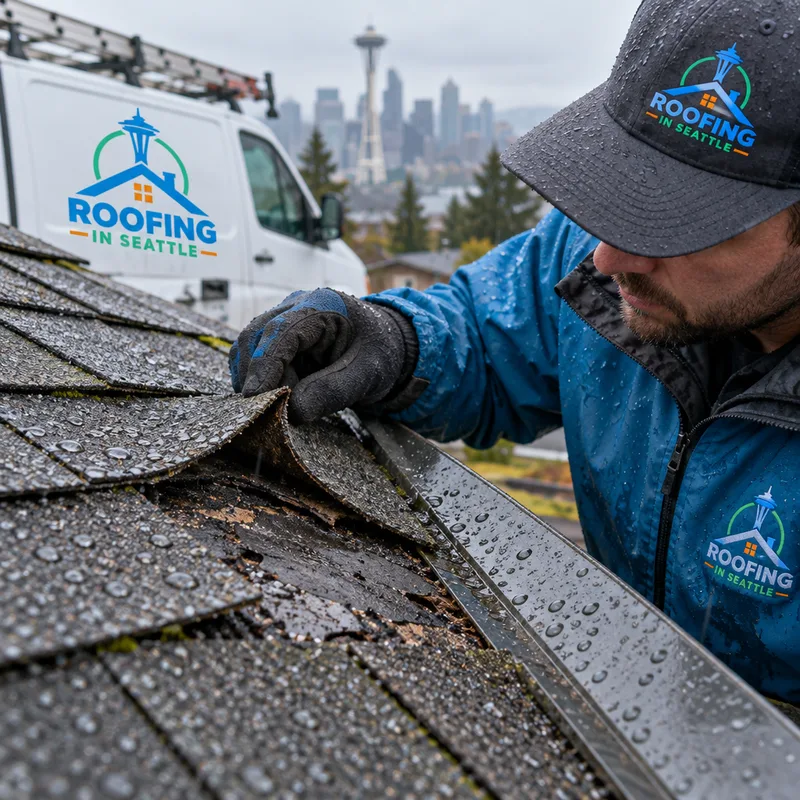
The contractor typically checks penetrations, step flashing, valleys, ridge caps, skylight curbs, exposed fasteners, and attic evidence of wet decking.
If the roof is compromised, temporary protection such as a tarp or targeted patch may reduce intrusion until permanent work can be completed.
The scope may include damaged shingles or underlayment, rebuilt flashing, a corrected vent boot, or a repaired low-slope membrane seam.
If water is getting in, the hardest part is tracking down the real entry point.
Describe what you're seeing once and get connected with a local contractor who can inspect, protect the opening if needed, and lay out the repair.
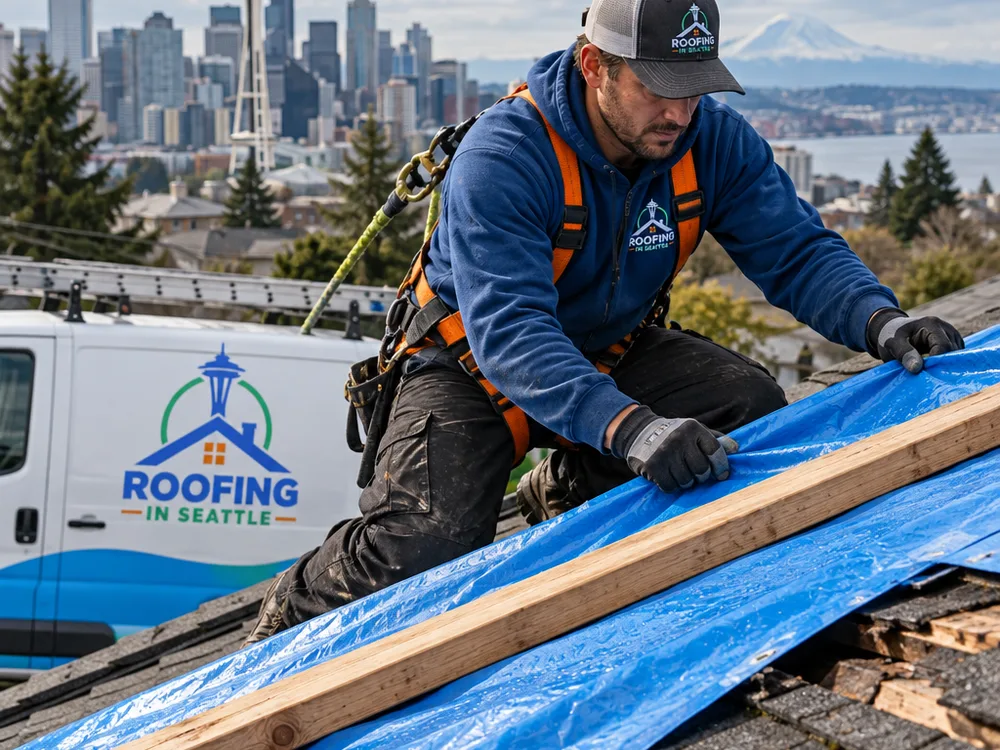
A tarp is typically used when the roof surface cannot be reliably repaired in the current conditions or when damage is broad enough that immediate protection is the safest first step. The contractor will weigh active intrusion, wind exposure, roof pitch, and where the damage sits to decide whether a targeted repair is practical or temporary coverage makes more sense first.
The most useful details are where the leak shows up inside, when it happens, and what you can safely observe from the ground. If you know the roof type, approximate age, and whether there are skylights, chimneys, or recent work near the leak area, that helps narrow likely entry points.
Water can travel along framing, insulation, and the underside of roof decking before it drips into a room. Prolonged rain can keep materials saturated long enough for water to migrate farther from the entry point, so inspection often includes upslope valleys, penetrations, and step flashing.
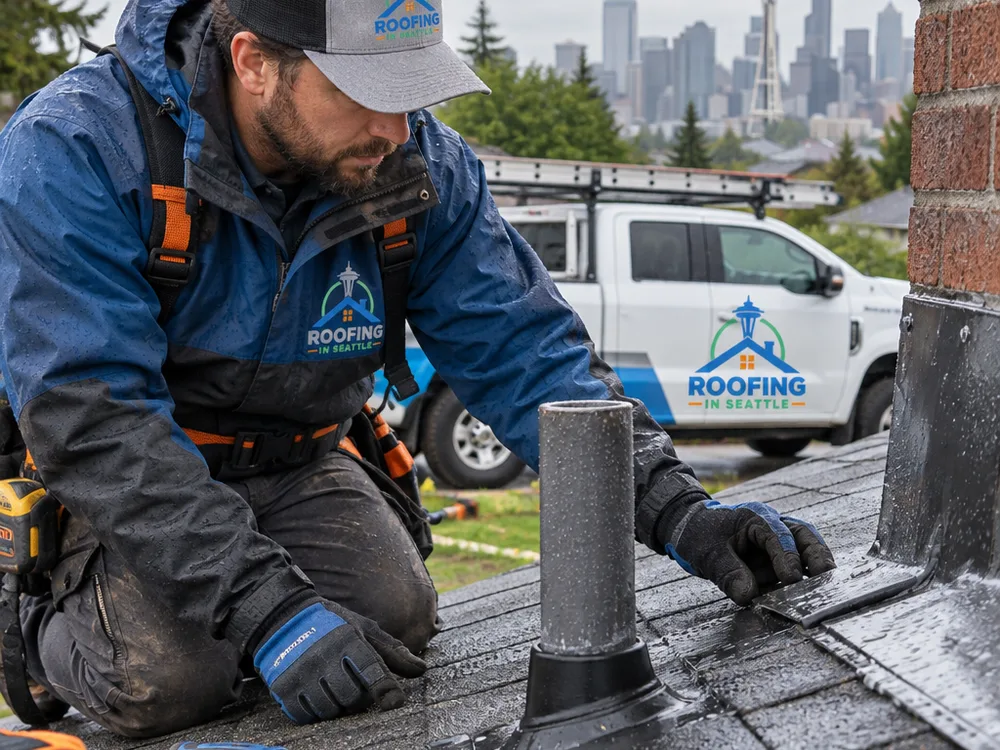
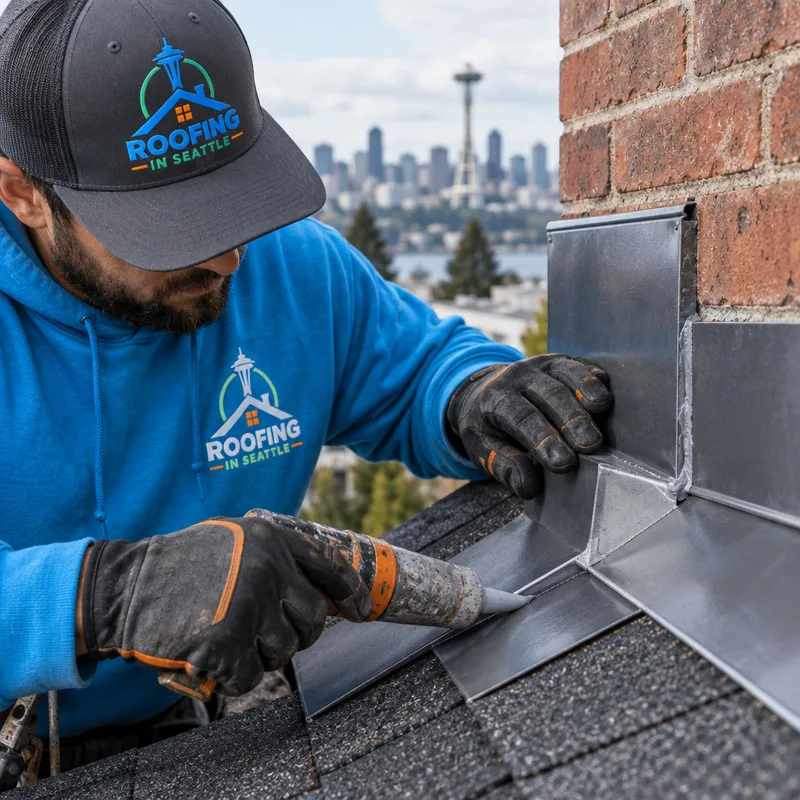
Many shingle-roof leaks start at flashing details and penetrations, including plumbing vent boots, skylight curbs, chimneys, and wall-to-roof intersections with step flashing. Valleys and ridge caps also take heavy water flow and wind.
Low-slope roofs are usually repaired by addressing the membrane system and drainage details rather than replacing shingles. A contractor may look for open seams, punctures, failing edge metal, or clogged drains and scuppers, then propose a method appropriate for the installed membrane.
Often yes, because attic evidence can confirm the leak path and the location of wet decking or fasteners. If attic access is difficult, clearing a safe path to the access hatch and turning on a light can make the inspection more efficient.
When you call, we take a short description of the problem and connect you with a local contractor who handles roof leak repairs and storm damage work in the Seattle area. You discuss the situation directly with the contractor and choose whether to proceed.
Call Roofing in Seattle and describe what you're seeing once. We'll connect you with a local roofing contractor who can evaluate the issue, explain the repair options, and help you plan the next steps.
CALL NOW: (206) 207-2777Service Area
Our referral network covers Seattle, Washington and nearby communities — explore the map to see the neighborhoods and surrounding areas we serve.